Reverse Engineering Anything in the Virtual World: The Art of Understanding Digital Systems
Explore the world of reverse engineering and discover how websites, mobile apps, software, APIs, games, and AI systems work behind the scenes. Learn essential techniques, open-source tools like Ghidra, Frida, and JADX, and practical methods for understanding digital technology with Lunetra.
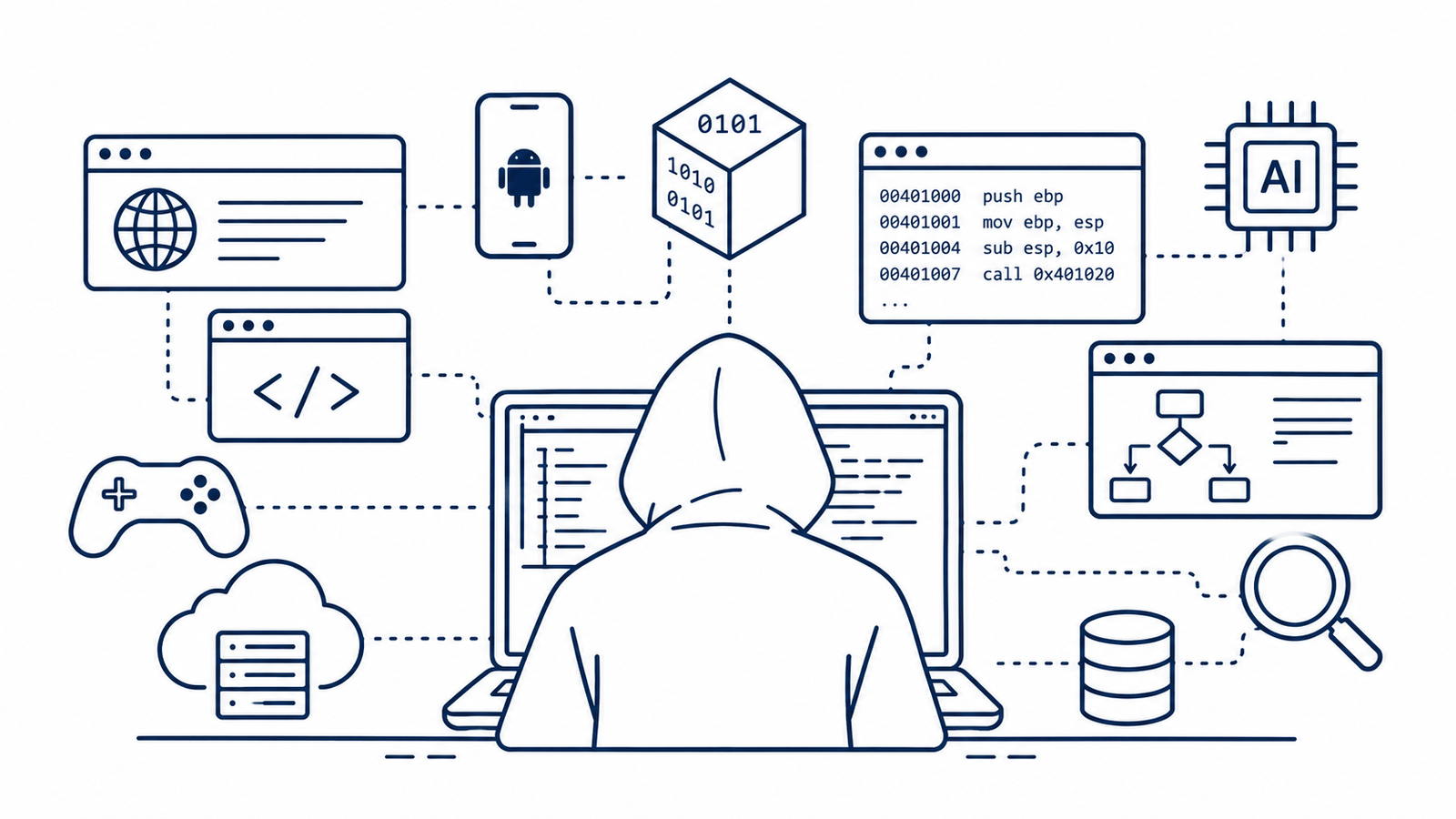
Every application we open, every website we visit, and every digital service we use is built on layers of technology that most users never see.
But what if we could explore those hidden layers?
What if we could understand how an application processes information, how a website communicates with its server, how software executes instructions, or how a virtual environment responds to user actions?
This is the fascinating world of reverse engineering.
At Lunetra, we believe that understanding technology deeply is one of the most valuable skills in the digital age. Reverse engineering transforms ordinary technology users into curious investigators who can explore how digital systems are designed, implemented, and operated.
Whether you're a software developer, cybersecurity researcher, student, or technology enthusiast, learning reverse engineering can change how you see the virtual world.
What Is Reverse Engineering?
Reverse engineering is the process of examining an existing product, application, or system to understand its internal structure, components, functionality, and design.
Traditional software development moves from an idea to a working product.
Reverse engineering moves in the opposite direction: from a working product toward an understanding of how it was built.
For example, imagine using an application without knowing its source code.
You might investigate:
- How the application processes user input.
- How its interface communicates with internal logic.
- What types of data it stores or exchanges.
- How different components interact.
- How its behavior changes under different conditions.
- Which technologies or software libraries it uses.
The objective is not necessarily to recreate the application. It is to understand the principles behind its behavior.
Reverse engineering is ultimately a method of learning through systematic observation, experimentation, and analysis.
Can We Reverse Engineer Anything in the Virtual World?
Many digital systems can be studied through reverse engineering, although the amount of information available depends on access, encryption, architecture, technical protections, and legal permissions.
Let's explore the major areas.
1. Reverse Engineering Websites
A website consists of multiple technologies working together, including HTML, CSS, JavaScript, server applications, databases, and network protocols.
By inspecting a website, developers can study its publicly observable behavior and client-side implementation.
Common areas of investigation include:
- HTML structure and page elements.
- CSS layouts and responsive design.
- JavaScript execution and event handling.
- Network requests and response formats.
- Browser storage and caching behavior.
- Performance and rendering patterns.
Browser Developer Tools provide an excellent starting point.
For example, a developer can inspect their own web application using Chrome DevTools to understand which resources are loaded and how frontend components communicate with backend services.
However, viewing client-side code does not automatically reveal private backend implementations.
Practical use case: Understanding why a webpage becomes slow when loading large datasets.
2. Reverse Engineering Mobile Applications
Android and iOS applications often contain compiled code, assets, configuration files, and communication interfaces.
Application analysis helps researchers understand how the application behaves internally.
For Android applications, authorized research may involve examining application packages, permissions, components, and code representations.
Popular tools include:
JADX: A tool for examining Android DEX and APK files and viewing Java-like decompiled code.
Apktool: Useful for decoding Android application resources and supported package components.
Frida: A dynamic instrumentation toolkit that can help developers and researchers observe program behavior during execution.
These tools are particularly useful for analyzing applications you own, develop, or are authorized to assess.
Practical use case: Examining an internally developed Android application to discover why a certain function consumes excessive memory.
3. Reverse Engineering Desktop Software and Executables
Compiled software is usually distributed as executable files rather than readable source code.
Reverse engineers analyze these files to understand their structure and operational behavior.
For instance, a Windows executable may contain machine instructions, imported libraries, resources, and metadata.
A reverse engineer can investigate:
- Program entry points.
- Function relationships.
- Memory allocation patterns.
- File operations.
- Imported system libraries.
- Control flow and execution paths.
Tools such as Ghidra, radare2, and x64dbg support different forms of binary analysis.
Practical use case: Investigating an old application whose original source code has been lost.
4. Reverse Engineering APIs and Network Communication
APIs allow software components to exchange information.
Understanding API behavior can reveal how an application communicates, handles errors, authenticates requests, and represents data.
For systems you own or are authorized to test, researchers can examine:
- HTTP request methods.
- Request and response structures.
- JSON data formats.
- API versioning.
- Error responses.
- Network performance.
Tools such as browser network inspectors, Postman, and Wireshark help developers investigate communication patterns.
However, undocumented interfaces are not automatically public or authorized for unrestricted use.
Practical use case: Documenting a legacy internal API so a company can migrate its application to a modern architecture.
5. Reverse Engineering Games and Virtual Environments
Video games combine programming, graphics, physics, sound, artificial intelligence, and interactive simulation.
Researchers may study game architecture to understand how virtual environments are constructed.
Interesting research areas include:
- Rendering pipelines.
- Asset formats.
- Physics simulation.
- Character animation.
- Game state management.
- Artificial intelligence behavior.
- Performance optimization.
Game reverse engineering can also contribute to compatibility research, preservation, modding where permitted, and technical education.
Practical use case: Investigating an open-source game to understand how its physics engine calculates object collisions.
6. Reverse Engineering AI and Machine Learning Systems
Artificial intelligence introduces another dimension to reverse engineering.
Instead of examining only ordinary program logic, researchers may investigate how machine learning systems respond to different inputs.
Some relevant techniques include:
- Studying model architectures when available.
- Examining open model weights and configurations.
- Testing input-output relationships.
- Measuring latency and resource consumption.
- Comparing model behavior across datasets.
- Analyzing open-source inference pipelines.
There is an important distinction between understanding observable model behavior and recovering its exact internal implementation.
Black-box testing can suggest patterns, but it usually cannot prove how an inaccessible model was trained or implemented.
Practical use case: Comparing an open-source image classifier's responses to different lighting conditions to identify reliability problems.
Static Analysis vs Dynamic Analysis
Two foundational techniques are used throughout software reverse engineering.
Static Analysis
Static analysis involves examining a program without executing it.
Researchers inspect files, code representations, metadata, strings, and program structure.
This approach can help reveal architectural information and potential areas requiring further investigation.
For example, Ghidra can analyze compiled binary files and generate higher-level representations of machine instructions.
Dynamic Analysis
Dynamic analysis involves observing software while it runs.
Researchers examine runtime behavior, memory usage, function execution, network activity, and interactions between components.
Debuggers and instrumentation tools are often used in controlled environments.
Neither technique is sufficient for every investigation.
Combining static and dynamic analysis often produces a more complete understanding of a software system.
Best Open-Source Tools for Reverse Engineering
The open-source community has developed powerful tools that make reverse engineering more accessible.
Here are several useful projects worth exploring.
Tool
Primary purpose
Ghidra
Disassembly, decompilation, and binary analysis
radare2
Command-line reverse engineering and binary inspection
Frida
Runtime instrumentation and behavioral analysis
JADX
Android application decompilation
Apktool
Android package resource inspection
x64dbg
Windows executable debugging
ImHex
Hexadecimal data inspection and analysis
Wireshark
Network protocol and packet analysis
The right tool depends on the system being investigated.
A developer studying an Android application may start with JADX, while a researcher examining a compiled desktop application might prefer Ghidra.
GitHub provides an excellent collection of reverse engineering projects:
https://github.com/topics/reverse-engineering
How to Start Reverse Engineering: A Beginner-Friendly Workflow
Reverse engineering becomes easier when approached systematically.
Step 1: Choose a Legal Research Target
Start with a program you created, an open-source application, a deliberately designed training challenge, or another system for which you have explicit authorization.
Small programs are generally better for beginners.
Step 2: Observe the System
Before using advanced tools, interact with the application normally.
Document its features, inputs, outputs, and observable behavior.
Identify the questions you want to answer.
Step 3: Identify the Technology
Determine the file format, operating system, programming language, runtime, or platform involved.
This helps narrow down the appropriate tools.
Step 4: Perform Static Inspection
Examine available source code, binary structure, resources, and metadata.
Look for important functions and relationships between components.
Step 5: Observe Runtime Behavior
Execute the application in a safe testing environment.
Record relevant behavior using suitable debugging, instrumentation, or monitoring tools.
Step 6: Form and Test Hypotheses
Create an explanation for how a feature works.
Design controlled experiments to determine whether your explanation matches the observed results.
Step 7: Document Your Findings
Write down the architecture, workflow, evidence, limitations, and conclusions.
Documentation transforms technical investigation into reusable knowledge.
A Simple Reverse Engineering Experiment With Python
One of the easiest ways to learn reverse engineering is to examine the behavior of a small program you control.
Consider a function that transforms an input value:
def virtual_system(value): return (value * 3) + 7 for number in [1, 2, 3, 4, 5]: print(number, virtual_system(number))
The results are:
1 10 2 13 3 16 4 19 5 22
Now imagine you can observe the inputs and outputs but cannot see the function's source code.
You might notice that each increase of one in the input produces an increase of three in the output.
From these observations, you could hypothesize that the system follows a linear relationship:
Output = (Input × 3) + 7
Additional tests can determine whether this explanation continues to hold.
This is a simplified example of black-box reverse engineering: inferring a system's behavior from observable evidence.
Real software is more complicated, but the underlying reasoning process is similar.
Why Reverse Engineering Matters in Cybersecurity
Reverse engineering is an important discipline in defensive cybersecurity.
Security researchers use it to understand suspicious software, investigate vulnerabilities, and improve protections.
Some major applications include:
Malware analysis: Understanding how malicious software operates inside an isolated research environment.
Vulnerability research: Identifying weaknesses in software systems under authorized testing conditions.
Digital forensics: Studying software artifacts to reconstruct relevant technical activity.
Compatibility engineering: Understanding file formats and software interfaces to improve interoperability.
Legacy system maintenance: Recovering technical knowledge when documentation or original source code is unavailable.
These applications demonstrate that reverse engineering is not simply about taking software apart.
It can help developers build more reliable systems and organizations respond more effectively to technical problems.
Is Reverse Engineering Legal and Ethical?
The legality of reverse engineering depends on jurisdiction, contractual conditions, software licensing, copyright law, and the specific research activity.
Some circumstances may permit reverse engineering for interoperability, security research, or other legitimate purposes, while others may impose restrictions.
Ethical practice involves obtaining appropriate authorization, respecting user privacy, protecting sensitive information, and avoiding disruption to production systems.
Researchers should also follow applicable vulnerability disclosure procedures and avoid publishing confidential information.
Permission to observe a system does not necessarily authorize bypassing its security controls, extracting private data, or accessing restricted functionality.
Responsible reverse engineering is guided by technical curiosity, clear authorization, and respect for digital boundaries.
The Future of Reverse Engineering: AI, Automation, and Intelligent Analysis
Reverse engineering continues to evolve as software becomes more complex.
Artificial intelligence and automated analysis tools are changing how researchers inspect code and interpret program behavior.
AI-assisted systems may help with:
- Summarizing decompiled functions.
- Identifying patterns in complex program structures.
- Grouping related functions.
- Generating hypotheses about unfamiliar code.
- Explaining technical findings in natural language.
- Improving documentation workflows.
However, AI-generated explanations are not guaranteed to be accurate.
Reverse engineers still need to validate findings through evidence, controlled experiments, and technical reasoning.
The future will likely involve a closer partnership between automated tools and human investigators.
Why Developers Should Learn Reverse Engineering
Reverse engineering develops skills that extend beyond security research.
It encourages developers to think deeply about how software operates.
Learning it can improve understanding of:
- Operating systems and memory management.
- Computer architecture.
- Compilers and programming languages.
- Application security.
- Network communication.
- Software debugging.
- System design and interoperability.
Perhaps most importantly, it teaches a valuable engineering mindset:
Don't only ask what a system does. Ask how it does it, why it behaves that way, and what evidence supports your explanation.
Final Thoughts: Understanding the Digital World From the Inside
Technology is becoming increasingly sophisticated.
Modern applications combine countless components, from user interfaces and cloud services to cryptographic protocols and intelligent algorithms.
Reverse engineering provides a systematic way to study these systems.
It replaces assumptions with observation, experimentation, and evidence.
For beginners, the journey can start with a simple Python function or open-source application.
For experienced developers, it can lead to deeper exploration of compiled binaries, software architectures, network protocols, and virtual environments.
At Lunetra, we see reverse engineering as more than a technical skill. It is a way of thinking that encourages curiosity, critical analysis, and meaningful innovation.
The next time you use a digital product, consider the engineering decisions hidden beneath its interface.
Because understanding technology is the first step toward building something better.
Explore. Analyze. Understand. Innovate.
Lunetra — Exploring Technology Beyond the Surface.
Further Reading and Resources
- GitHub Reverse Engineering: https://github.com/topics/reverse-engineering
- Ghidra: https://github.com/NationalSecurityAgency/ghidra
- Frida: https://github.com/frida/frida
- radare2: https://github.com/radareorg/radare2
- JADX: https://github.com/skylot/jadx
- Apktool: https://github.com/iBotPeaches/Apktool
- x64dbg: https://github.com/x64dbg/x64dbg
- ImHex: https://github.com/WerWolv/ImHex
Disclaimer: This article is intended for educational, defensive security, and authorized software research purposes.
Keep exploring.
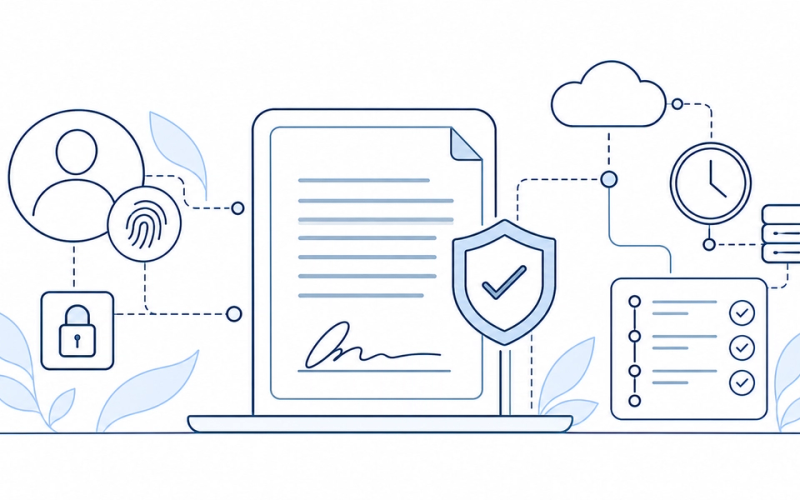
Digital Contract Trust and Surety: Building Agreements People Can Rely On
Discover how digital contracts build trust through identity verification, secure signatures, cryptographic integrity, trusted timestamps, audit trails and long-term verification.
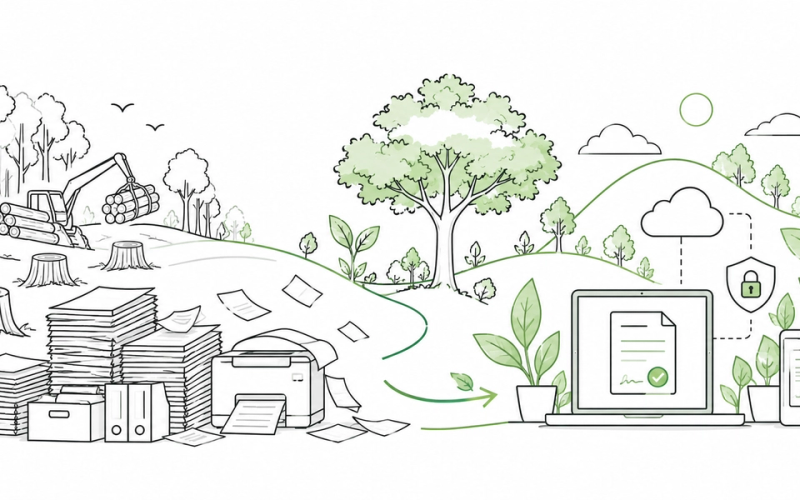
The Green Crisis: How Everyday Paper Use Adds Pressure to Our Forests
Explore how everyday paper use adds pressure to forests and natural resources, and how small sustainable choices, digital workflows and PurelySustain can help build a greener, paperless future.