The Green Crisis: How Everyday Paper Use Adds Pressure to Our Forests
Explore how everyday paper use adds pressure to forests and natural resources, and how small sustainable choices, digital workflows and PurelySustain can help build a greener, paperless future.
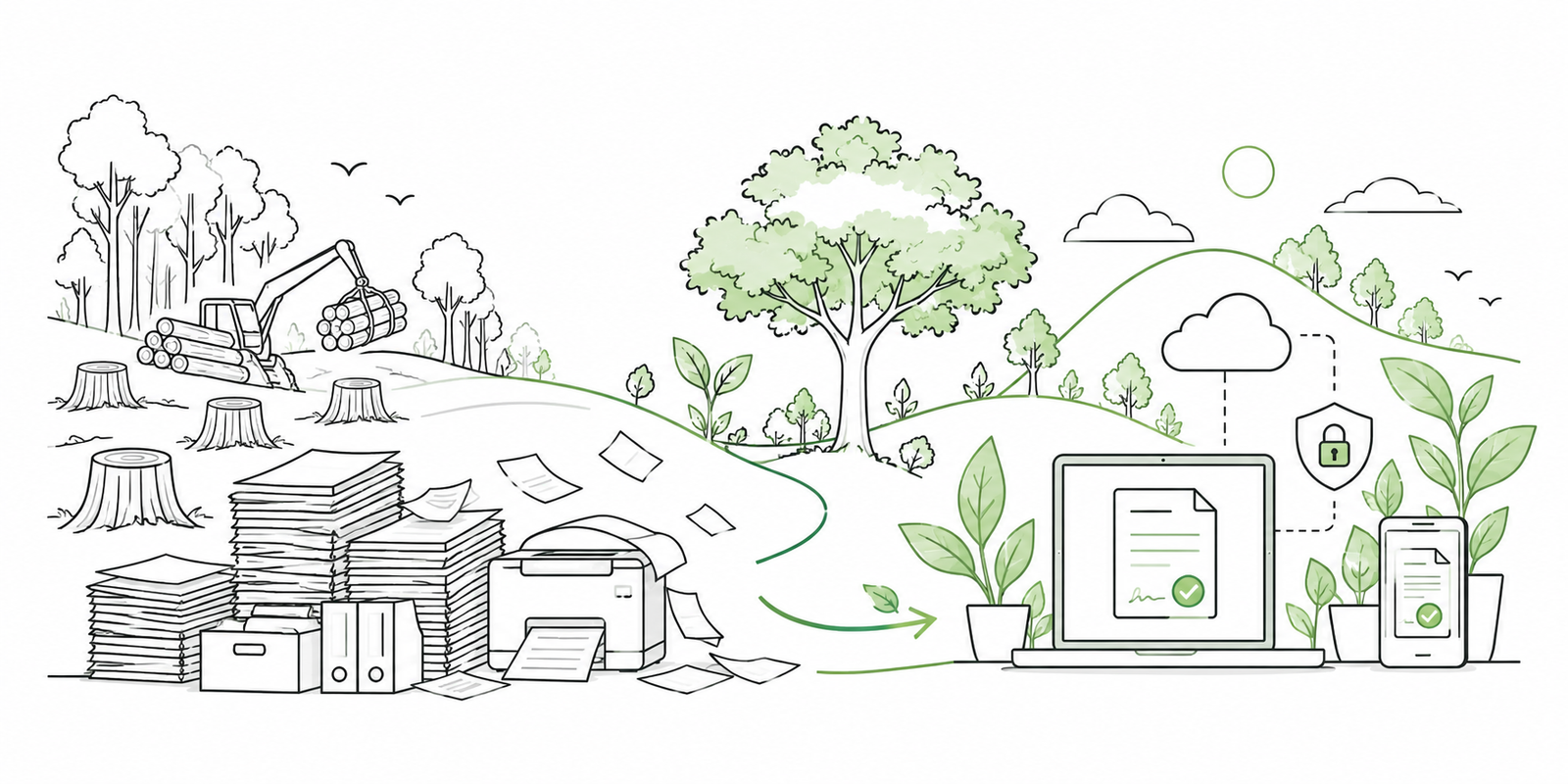
Forests are easy to take for granted.
We see a sheet of paper, a cardboard package, a printed invoice or a signed contract. What we rarely see is the much larger system behind it: raw materials, forestry, manufacturing, water, energy, chemicals, transportation, printing and eventually waste.
Paper remains essential in many parts of modern life, and responsibly managed forests can provide renewable materials. The problem is not that every sheet of paper directly means a tree has been unnecessarily destroyed.
The larger challenge is scale, waste and unnecessary consumption.
Across businesses, industries, schools, governments and households, enormous amounts of paper continue to be used for processes that increasingly have practical digital alternatives.
At Lunetra, we believe sustainability starts by asking a simple question:
Where can we use less without making life more difficult?
The Green Crisis Is Bigger Than Paper
Forests face pressure from many directions.
Agricultural expansion, infrastructure development, mining, urbanisation, fires, logging and industrial activity can all contribute to forest loss and degradation.
So it would be misleading to describe everyday office paper as the sole cause of declining forests.
But paper consumption is still part of a much larger resource challenge.
When paper is produced unnecessarily, we are not consuming only fibre. We are also using resources throughout its lifecycle.
A Sheet of Paper Has a Hidden Journey
Before a document reaches your desk, there can be an entire chain behind it:
Forest or Recycled Fibre → Pulp → Paper Production → Processing → Packaging → Transportation → Printing → Storage → Disposal or Recycling
Every stage has an environmental footprint.
That is why reducing unnecessary paper can matter even when the paper comes from responsibly managed sources.
Think About How Much Paper We Use Without Thinking
Consider a normal working day.
An employee prints a contract.
Another copy is printed for the client.
Someone discovers a mistake.
Both copies are discarded.
A corrected version is printed.
It is signed.
Then it is scanned so that everyone can have a digital copy anyway.
The original is placed in a folder.
The folder goes into a cabinet.
Eventually, someone has to decide how long it needs to be stored and how it should be destroyed.
And that is only one document.
Now multiply this pattern across thousands of businesses and millions of everyday transactions.
Paper Is Still Everywhere
We continue to rely on paper for:
- Contracts and agreements
- Employment documents
- Invoices and receipts
- Application forms
- Internal approvals
- Purchase orders
- NDAs
- Consent forms
- Reports
- Certificates
- Customer records
- Rental paperwork
- Legal and administrative documents
Some physical documents remain necessary because of legal, regulatory, accessibility or operational requirements.
But many others exist on paper simply because:
“This is how we have always done it.”
That is where technology has an opportunity to help.
The Environmental Cost Doesn't End With Trees
The sustainability conversation around paper should go beyond the number of trees involved.
Water
Pulp and paper manufacturing requires water. The amount and environmental impact vary depending on production methods, location, recycling practices and the type of paper being produced.
Reducing unnecessary demand can contribute to broader efforts to use resources more efficiently.
Energy
Turning fibre into finished paper requires industrial processing and energy.
Printing adds another stage of resource consumption.
Transportation
Raw materials, paper products and printing supplies move through supply chains before reaching homes and offices.
Ink and Printing Supplies
Physical documentation can also require ink, toner, cartridges, printers, replacement parts and maintenance materials.
Storage
Businesses sometimes maintain cabinets, rooms or external facilities simply to preserve physical records.
Waste
Finally, documents can be discarded.
Recycling helps keep materials in circulation, but recycling itself requires collection, sorting and processing.
The better sustainability question therefore becomes:
Did this document need to become physical in the first place?
Digital Does Not Automatically Mean Sustainable
There is another side to this conversation.
Replacing everything with software does not create an impact-free world.
Digital infrastructure requires data centres, networks, servers, electronic devices, electricity and hardware manufacturing.
So the responsible position is not:
Paper = Bad. Digital = Good.
It is:
Use resources intentionally and choose the most appropriate medium for the job.
A document that genuinely needs to exist physically should be printed responsibly.
A document that can safely, legally and conveniently remain digital often does not need to be printed simply out of habit.
Small Changes Can Create a More Sustainable Workflow
Sustainability does not always begin with revolutionary technology.
Sometimes it begins by removing unnecessary steps.
Businesses and individuals can start with a few practical changes.
Step 1: Create Documents Digitally
Start contracts, forms, invoices and agreements digitally rather than building paper-first workflows.
Step 2: Review Digitally
Allow people to review, comment on and approve documents without repeatedly printing drafts.
Step 3: Sign Digitally Where Appropriate
When legally and operationally suitable, use electronic or digital signing instead of:
Print → Sign → Scan → Email → Store
Step 4: Share Securely
Provide controlled digital access instead of creating multiple physical copies of the same document.
Step 5: Store Responsibly
Keep documents in properly secured digital storage with suitable access controls, backups and retention policies.
Step 6: Print Only When Necessary
Printing does not need to disappear completely.
It simply becomes an intentional decision.
Digital first. Print when necessary.
Sustainability Also Needs Trust
There is a reason many organisations still rely heavily on paper.
Paper feels tangible.
A physical signature feels permanent.
A stamped contract can sometimes feel more trustworthy than a file stored somewhere online.
Therefore, asking people to abandon paper without replacing its sense of trust is not enough.
Paperless technology needs to answer important questions:
Who created this document?
Who signed it?
What exactly did they sign?
When was it signed?
Has anything changed afterward?
Can its history be verified?
This is where digital identity, electronic signatures, cryptographic integrity, timestamps and audit trails become important.
The future of paperless work should not merely be less paper.
It should be:
Less paper with more verifiable trust.
Our Direction: PurelySustain
This challenge is one of the ideas behind PurelySustain, a product being developed by Lunetra.
PurelySustain explores how everyday document workflows can become simpler, more digital, secure and less dependent on unnecessary physical paperwork.
The vision is not to claim that one platform can solve deforestation.
The problem is far larger than any single product.
Instead, the idea is much more practical:
Help individuals and businesses reduce unnecessary paper, one workflow at a time.
How We Work Today
A traditional document workflow often looks like this:
Create Document
↓
↓
Review
↓
Make Corrections
↓
Print Again
↓
Sign
↓
Scan
↓
↓
File Physical Copy
↓
Store Digital Copy
There are several opportunities for unnecessary duplication.
A More Digital Future
With PurelySustain, our direction is toward a simpler workflow:
Create or Upload
↓
Review
↓
Send
↓
Verify
↓
Sign
↓
Timestamp
↓
Securely Store or Connect Storage
↓
Retrieve When Needed
↓
Print Only When Genuinely Required
It sounds like a small change.
But sustainability is often built from millions of small decisions.
One Contract. One Form. One Invoice at a Time.
PurelySustain will not plant a forest every time someone signs a document.
We do not want to make environmental promises that technology cannot honestly guarantee.
What technology can do is help reduce unnecessary processes.
One contract that does not need to be printed.
One form completed digitally.
One invoice delivered electronically.
One agreement signed without printing several copies.
One business that gradually moves from paper-first to digital-first.
One organisation that stops storing cabinets full of documents it can securely manage digitally.
Individually, these changes seem small.
At scale, small changes can become meaningful.
Technology Should Help Us Use Less
For decades, technological progress has often meant producing and consuming more.
Perhaps the next stage of progress should also ask:
Can technology help us need less?
Less unnecessary printing.
Less duplication.
Less physical storage.
Less waste.
Less friction.
And, where possible, less pressure on natural resources.
At Lunetra, we believe sustainability and technology do not need to exist as separate conversations.
Through products such as PurelySustain, we want to explore how better-designed digital systems can make everyday work simpler while helping people make more resource-conscious choices.
We may not transform the world with one dramatic action.
But we can start with the next document.
Create digitally. Sign responsibly. Print only when necessary.
Small steps. Less paper. A greener direction.
Keep exploring.
Lunetra: One Company, Building Focused Brands
Lunetra is a parent company based in Bankura, West Bengal, building brands across consumer products and technology. Its portfolio includes Soorganic, for homemade small-batch foods, and PurelySustain, for secure paperless workflows—united by a vision to create practical, responsible products for everyday life.
Reverse Engineering Anything in the Virtual World: The Art of Understanding Digital Systems
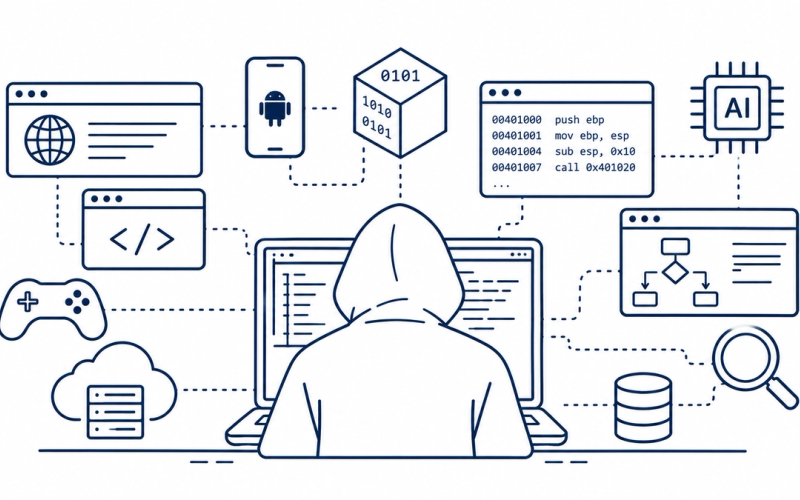
Explore the world of reverse engineering and discover how websites, mobile apps, software, APIs, games, and AI systems work behind the scenes. Learn essential techniques, open-source tools like Ghidra, Frida, and JADX, and practical methods for understanding digital technology with Lunetra.