Digital Contract Trust and Surety: Building Agreements People Can Rely On
Discover how digital contracts build trust through identity verification, secure signatures, cryptographic integrity, trusted timestamps, audit trails and long-term verification.
Digital Contract Trust and Surety: Building Agreements People Can Rely On
As more business processes move online, contracts are becoming digital too.
Employment agreements, vendor contracts, service agreements, NDAs, rental agreements, approvals and other important documents can now be created, shared and signed without printing a single sheet of paper.
But removing paper creates a new challenge:
How do we know a digital contract can actually be trusted?
At Lunetra, we believe digitisation should do more than make paperwork faster. Digital systems should make important documents easier to verify, harder to manipulate and more reliable over time.
That means a trustworthy digital contract needs more than an uploaded PDF and an image of a signature.
It needs a complete digital trust and surety system.
What Makes a Digital Contract Trustworthy?
A reliable digital agreement should be able to answer several fundamental questions:
- Who signed the contract?
- How was the signer authenticated?
- Did the signer clearly intend to sign?
- What exact version of the document was signed?
- When was it signed?
- Was anything changed afterward?
- Can the signing history be verified?
- Can the evidence still be checked years later?
These questions form the foundation of digital contract trust.
A useful way to think about the process is:
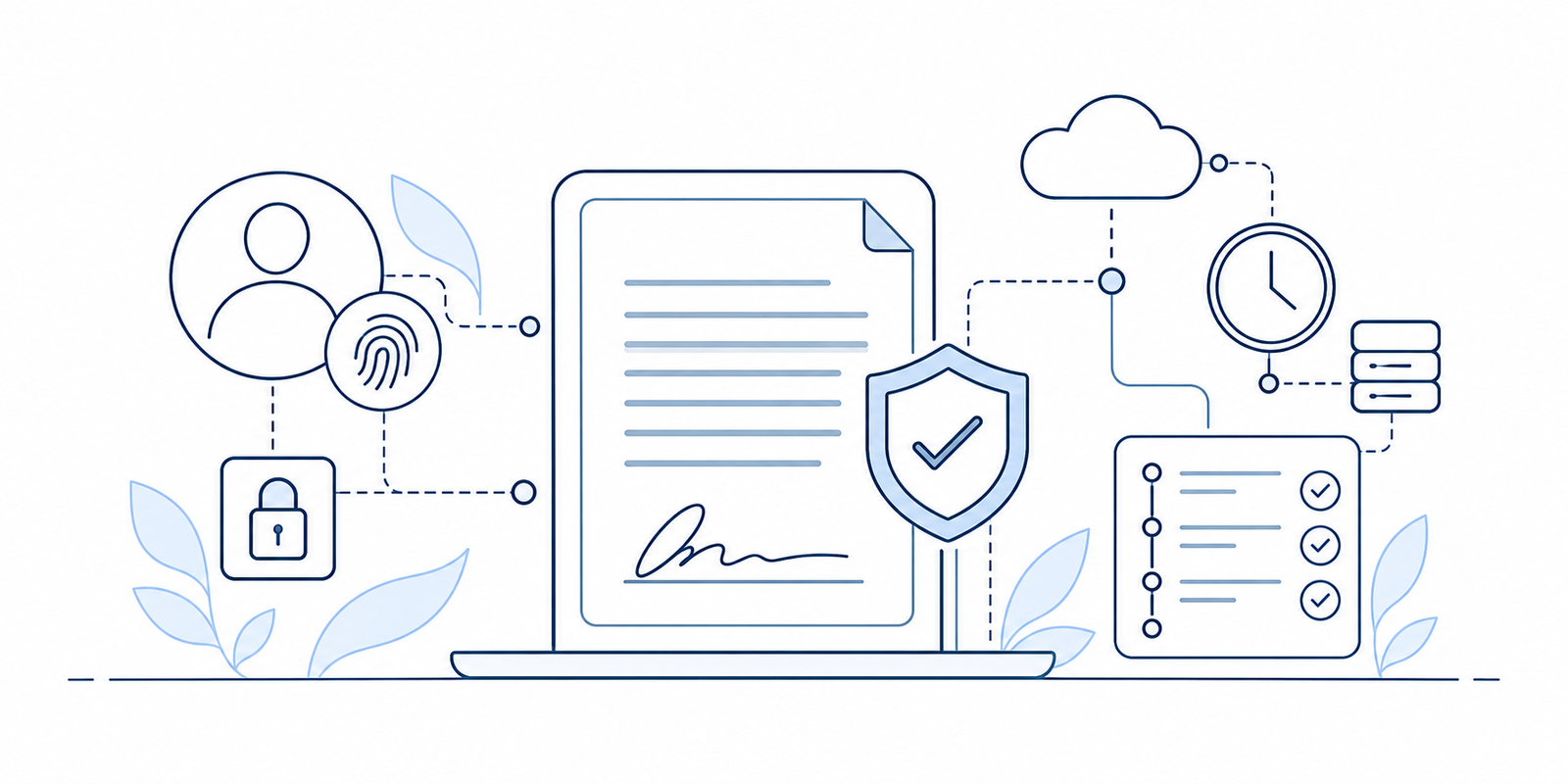
Identity → Authentication → Consent → Document → Signature → Timestamp → Integrity → Audit Evidence → Verification
Every layer adds another piece of evidence.
1. Identity: Knowing Who Is Behind the Signature
The first requirement is establishing the identity of the person participating in the contract.
Depending on the type and risk of the agreement, identity assurance might involve email verification, mobile OTP, verified user accounts, organizational identity systems or approved identity-verification providers.
A low-risk consent form may not need the same level of verification as a high-value commercial contract.
The goal should therefore be proportional verification: the stronger the risk, the stronger the identity assurance.
Identity Is Different From a Signature
A signature drawn on a screen may look familiar, but appearance alone does not establish identity.
A stronger system connects the signature event with authenticated identity information and other evidence generated during the signing process.
This creates a more meaningful relationship between:
Person → Identity → Signing Action → Contract
2. Authentication: Confirming Access and Control
Once an identity has been established, the system should have a reliable way to authenticate the participant.
Depending on the required assurance level, this can include passwords, passkeys, OTP verification, multi-factor authentication, organizational login systems or cryptographic credentials.
Authentication should not exist separately from the contract transaction.
Relevant authentication events can become part of the contract's evidence trail.
3. Intent: Did the Person Actually Agree?
Knowing someone's identity does not automatically prove that they intended to enter into an agreement.
The signing experience should clearly communicate what action the user is taking.
For example:
“By selecting Sign Contract, I confirm that I have reviewed this document and intend to sign it electronically.”
The platform can then record the consent event along with information such as the signer, document version, transaction identifier and time.
This provides stronger evidence that signing was a deliberate action rather than an accidental interaction.
4. Document Integrity: Proving the Contract Has Not Changed
Imagine signing a five-page contract today.
Tomorrow, somebody changes one sentence on page three.
Would you be able to detect it?
This is where cryptographic hashing becomes important.
A cryptographic hash creates a digital fingerprint of a document.
Conceptually:
Contract.pdf → Cryptographic Hash → Unique Document Fingerprint
If the document changes, its fingerprint changes.
The signed transaction can therefore be associated with the fingerprint of the exact document that existed at the time of signing.
This helps establish document integrity.
5. Electronic Signatures and Digital Signatures Are Not the Same Thing
These terms are sometimes used interchangeably, but they can represent different mechanisms.
An electronic signature can represent a person's intent to sign electronically.
A digital signature generally uses cryptographic technology to provide stronger technical evidence relating to authenticity and integrity.
Certificate-based digital signatures can help determine whether a document was signed using a particular signing credential and whether the signed content has subsequently changed.
For PDF documents, standards such as PAdES can support interoperable digital signatures.
More advanced profiles such as PAdES-LT and PAdES-LTA can support longer-term validation by preserving additional evidence required for future verification.
6. Trusted Timestamps: Establishing When Something Happened
A trustworthy agreement needs reliable time evidence.
Simply storing:
Signed: 6 October 2026, 2:32 PM
in a database provides useful information, but the user must still trust the application storing that timestamp.
Higher-assurance systems can use cryptographic timestamping.
Standards such as RFC 3161 enable a Timestamp Authority to provide cryptographically protected evidence connecting digital data to a particular point in time.
This can become especially valuable for documents that need to remain verifiable long after signing.
7. Building a Complete Audit Trail
The final signed document is only one part of the story.
A contract may pass through many events:
Contract Created
↓
Recipient Invited
↓
Identity / Authentication Completed
↓
Document Viewed
↓
Consent Confirmed
↓
Contract Signed
↓
Timestamp Applied
↓
Final Document Sealed
↓
Verification Evidence Created
A properly designed audit trail records the relevant events throughout this journey.
This may include transaction identifiers, document versions, timestamps, authentication events and other proportionate security information.
The objective is not to collect as much user data as possible.
The objective is to maintain useful evidence while respecting privacy.
8. Making the Audit Trail Tamper-Evident
There is another problem.
What happens if someone can modify the audit history itself?
Trustworthy systems should make unauthorized changes to important evidence detectable.
One approach is cryptographic hash chaining.
For example:
Event 001 → Hash A
Event 002 + Hash A → Hash B
Event 003 + Hash B → Hash C
Each event becomes connected to the previous event.
If an earlier record is changed, the subsequent chain no longer matches.
This does not mean that any system can truthfully promise data is “impossible to change.”
A better security principle is:
Important changes should be difficult to perform without authorization and detectable when they occur.
9. Long-Term Contract Surety
Some agreements need to remain trustworthy for many years.
That creates another challenge.
Certificates can expire. Signing credentials may be revoked. Cryptographic standards evolve. Verification services may change.
A long-term digital contract strategy therefore needs to consider how verification evidence will survive beyond the day the contract was signed.
Standards such as PAdES-LT and PAdES-LTA are relevant here because they can preserve additional validation information with signed PDF documents.
The objective is not simply:
“This signature is valid today.”
It is:
“Can sufficient evidence remain available to evaluate this signature in the future?”
10. Trust Should Be Layered
At Lunetra, we see digital trust as a layered system rather than a single feature.
A strong architecture can combine:
Identity
Establish who is participating.
Authentication
Confirm access and control.
Consent
Record deliberate intent.
Document Integrity
Protect the exact document version using cryptographic fingerprints.
Electronic or Digital Signature
Connect the signing action to the document.
Trusted Time
Establish reliable evidence of when important events occurred.
Audit Trail
Record the lifecycle of the agreement.
Tamper Evidence
Make unauthorized changes detectable.
Long-Term Validation
Preserve evidence needed for future verification.
Independent Verification
Allow evidence to be checked instead of simply displaying a “Verified” badge.
Together, these layers create something much more valuable than a digital signature alone.
They create a digital trust framework.
Do Digital Contracts Need Blockchain?
Not necessarily.
Blockchain can be useful in specific situations where multiple independent parties need a shared, tamper-evident record.
However, blockchain should not automatically be treated as the foundation of every digital contract platform.
Strong digital trust can also be built using established technologies including cryptographic hashing, PKI, digital signatures, trusted timestamping, append-only audit records and long-term signature validation.
The technology should follow the trust requirement.
Instead of asking:
“How can we put this contract on a blockchain?”
a better question is:
“What evidence do we need to establish that this contract is trustworthy?”
Privacy Is Part of Digital Trust
Security alone does not create trust.
A contract system may use sophisticated cryptography while unnecessarily collecting or exposing personal information.
Privacy therefore needs to be designed into the architecture.
That means considering:
- Data minimisation
- Encryption in transit and at rest
- Secure key management
- Role-based access
- Limited data retention
- Clear authorization boundaries
- Secure infrastructure
- Transparent processing
- User control over documents and data
A trustworthy digital system should protect both the document and the people behind it.
How This Connects With Lunetra
Lunetra works across physical and digital products, but the principle behind our work is increasingly the same:
technology should solve practical problems without making the experience unnecessarily complicated.
As part of that direction, Lunetra is developing PurelySustain, an initiative focused on making document workflows more digital, secure and paperless.
Our exploration of digital contracts goes beyond simply replacing printed documents.
We are interested in how identity, cryptography, digital signatures, timestamps, audit evidence, privacy and long-term verification can work together to create document workflows that people and businesses can confidently rely on.
The challenge is not simply:
How do we eliminate paper?
It is:
How do we replace paper with a digital process that provides meaningful evidence and trust?
Building a More Trustworthy Paperless Future
Digital transformation should not require people to blindly trust software.
The strongest digital systems should provide evidence.
For a contract, that means being able to establish:
Who signed it.
What they signed.
When they signed it.
How their identity was established.
Whether the document changed afterward.
What happened throughout the transaction.
Whether the evidence can still be verified later.
That is the direction we believe digital contracting needs to take.
At Lunetra, our goal is to explore and build practical technology where security, usability, sustainability and verifiability work together.
Because the future of contracts is not simply digital.
It is verifiable.
Keep exploring.
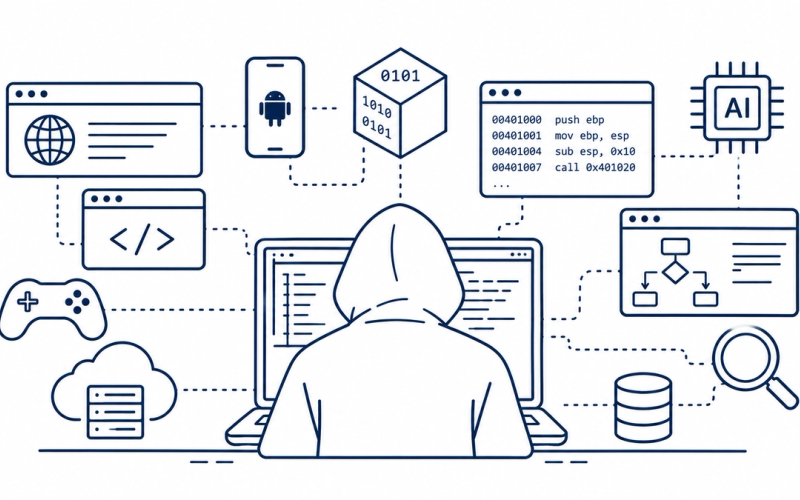
Reverse Engineering Anything in the Virtual World: The Art of Understanding Digital Systems
Explore the world of reverse engineering and discover how websites, mobile apps, software, APIs, games, and AI systems work behind the scenes. Learn essential techniques, open-source tools like Ghidra, Frida, and JADX, and practical methods for understanding digital technology with Lunetra.
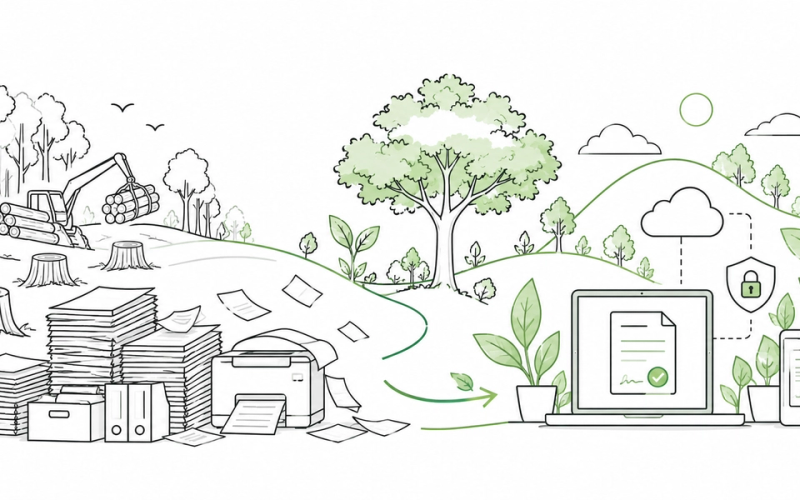
The Green Crisis: How Everyday Paper Use Adds Pressure to Our Forests
Explore how everyday paper use adds pressure to forests and natural resources, and how small sustainable choices, digital workflows and PurelySustain can help build a greener, paperless future.